
Redwood County District Court Jurisdiction
Redwood County District Court is the county's state trial court. The official court page places the court at the Redwood County courthouse and lists the local Court Administrator, public phone number, hours, calendar link, copy request link, court fees, jury service, language access, ADA accommodation, and Fifth Judicial District resources. It is the court level used for local civil filings, criminal prosecutions, family cases, probate matters, traffic citations, housing cases, conciliation claims, juvenile matters, and judgments.
Minnesota's court structure is statewide. The hierarchy is Minnesota Supreme Court, Minnesota Court of Appeals, and District Courts. Redwood County belongs to the Fifth Judicial District. The state does not use a Texas-style split of county court, district court, JP court, and elected county clerk for Redwood County case files. Court administration is the practical office for court dates, copies, certified records, and questions about records that MCRO does not show remotely.
Redwood County District Court
250 S. Jefferson
Redwood Falls, MN 56283
(507) 616-4800
Monday-Friday, 8:00 a.m.-4:30 p.m.
Redwood County District Court Table
There is one primary trial court entry for Redwood County. Divisions are not separate courthouse courts; they are case types handled through the same District Court system. The court also connects to statewide Minnesota Judicial Branch systems for forms, fees, copy requests, payment, remote hearings, and public access tools.
| Court | Type | Address | Phone |
|---|---|---|---|
| Redwood County District Court | General-jurisdiction trial court for civil, criminal, family, probate, juvenile, traffic, housing, conciliation, and judgments | 250 S. Jefferson, Redwood Falls, MN 56283 | (507) 616-4800 |
| Fifth Judicial District | Regional judicial district including Redwood County | District administration page, not a separate Redwood courthouse | Fifth Judicial District |
| Minnesota Court of Appeals | Intermediate appellate court | Statewide appellate court | About Minnesota Courts |
| Minnesota Supreme Court | Highest state court and administrative head of Minnesota judiciary | Statewide appellate court | About Minnesota Courts |
The Redwood County District Court fee table lists local filing and copy fees for case categories handled in this trial court.
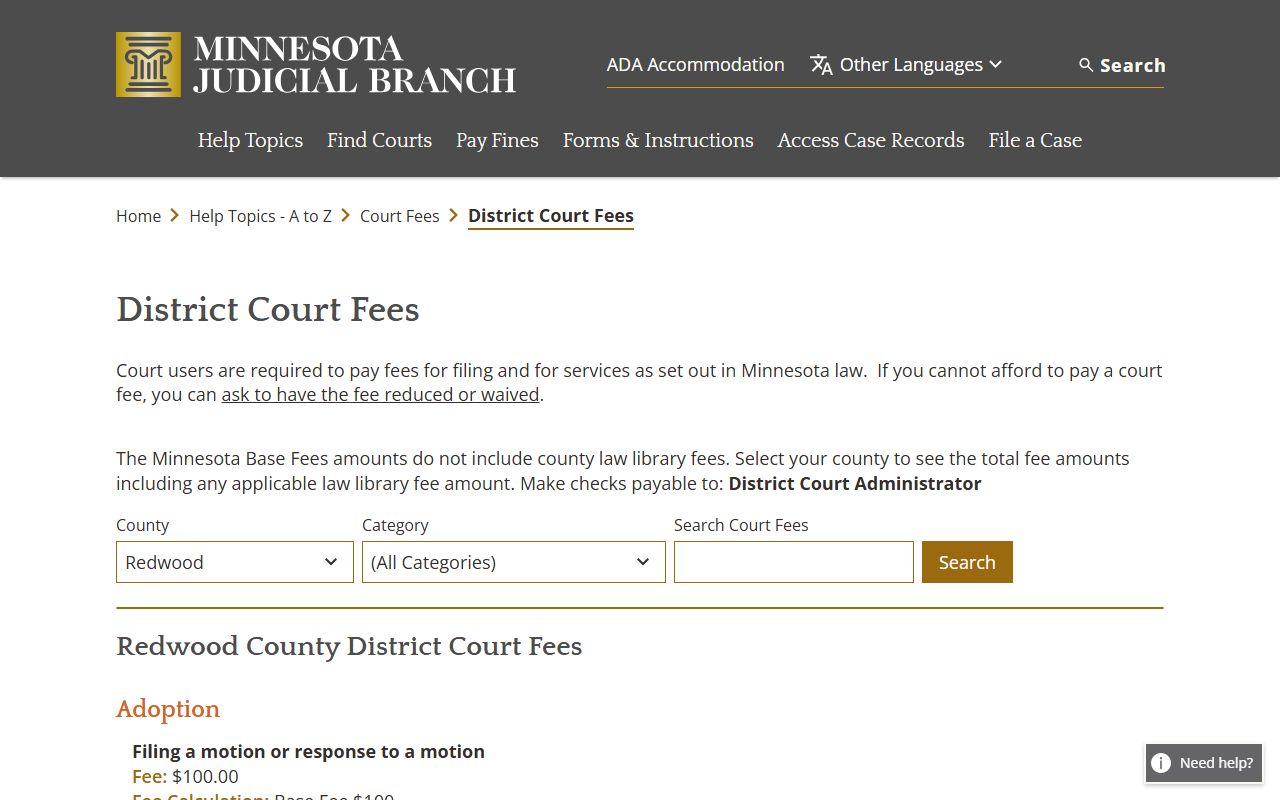
Fee information supports copy and filing decisions, but a fee table is not a substitute for court staff confirmation when a filing is unusual.
Redwood County District Court Comparison
The key local distinction is that Redwood County does not have separate lower trial courts for county-court or justice-court work. Traffic citations, petty misdemeanors, criminal cases, civil cases, family matters, probate filings, and small claims-style conciliation cases route through District Court or statewide Judicial Branch channels. County offices still matter for non-court records. The Recorder handles marriage, birth, death, land, military discharge, notary, and related record functions at the Government Center.
| Point | District Court | County Court | Justice / Municipal Court |
|---|---|---|---|
| Redwood County status | Active local trial court. | No separate county court found for local trial cases. | No separate Redwood County justice or municipal court found. |
| Case role | Civil, criminal, family, probate, juvenile, traffic, housing, conciliation, and judgments. | Not a separate court path in the research. | Traffic and payable matters route through District Court and Court Payment Center systems. |
| Records source | MCRO, court calendar, courthouse terminals, court administration, copy request forms. | Not applicable for Redwood County court files. | Not applicable as a separate court record source. |
| Local office | Court Administrator at the courthouse. | County offices handle non-court functions only where assigned. | City police may create incident records, but court cases route to District Court. |
Redwood County Case Flow
A District Court case moves by filings, hearings, orders, and docket entries. Criminal cases may begin with a complaint or citation, followed by first appearance, Rule 8 appearance, omnibus hearing, plea hearing, trial, sentencing, probation review, or warrant activity. Civil cases may begin with a complaint or petition, followed by answer, motions, settlement work, hearing, judgment, and post-judgment activity. Probate matters use the 64-PR track for estates, trusts, guardianships, conservatorships, and related hearings.
Criminal flow: Charge or complaint › First appearance › Rule 8 or omnibus stage › Plea or trial › Disposition › Sentencing › Appeal or post-judgment motion.
Civil flow: Filing › Service and response › Motions or settlement conference › Hearing or trial › Judgment › Collection, satisfaction, or appeal.
Parties can use MCRO for public case details, but certified copies and civil judgment search certifications must be obtained from local court administration. The broader Redwood County court records path explains those access channels in more detail.
Redwood County District Court Divisions
District Court divisions are best understood by case type. Civil cases include ordinary civil actions, judgments, name changes, housing and eviction matters, conciliation claims, writs, subpoenas, and judgment docket activity. Criminal cases include complaints, charges, appearances, bail hearings, plea hearings, warrants, probation violations, dispositions, and sentencing. Family cases include dissolution, custody, parenting time, paternity, child support, protection orders, harassment restraining orders, and child-protection matters, with remote access limits for sensitive case types.
Probate Division of District Court handles estates, trusts, guardianships, conservatorships, will safekeeping, inventories, accountings, creditor issues, and distributions. Traffic and petty misdemeanor records can involve MCRO citation searches and the Minnesota Court Payment Center. Juvenile matters are part of District Court but are often restricted. For parties who need statewide forms, the Minnesota Judicial Branch Forms and Instructions page includes forms and Minnesota Guide & File.
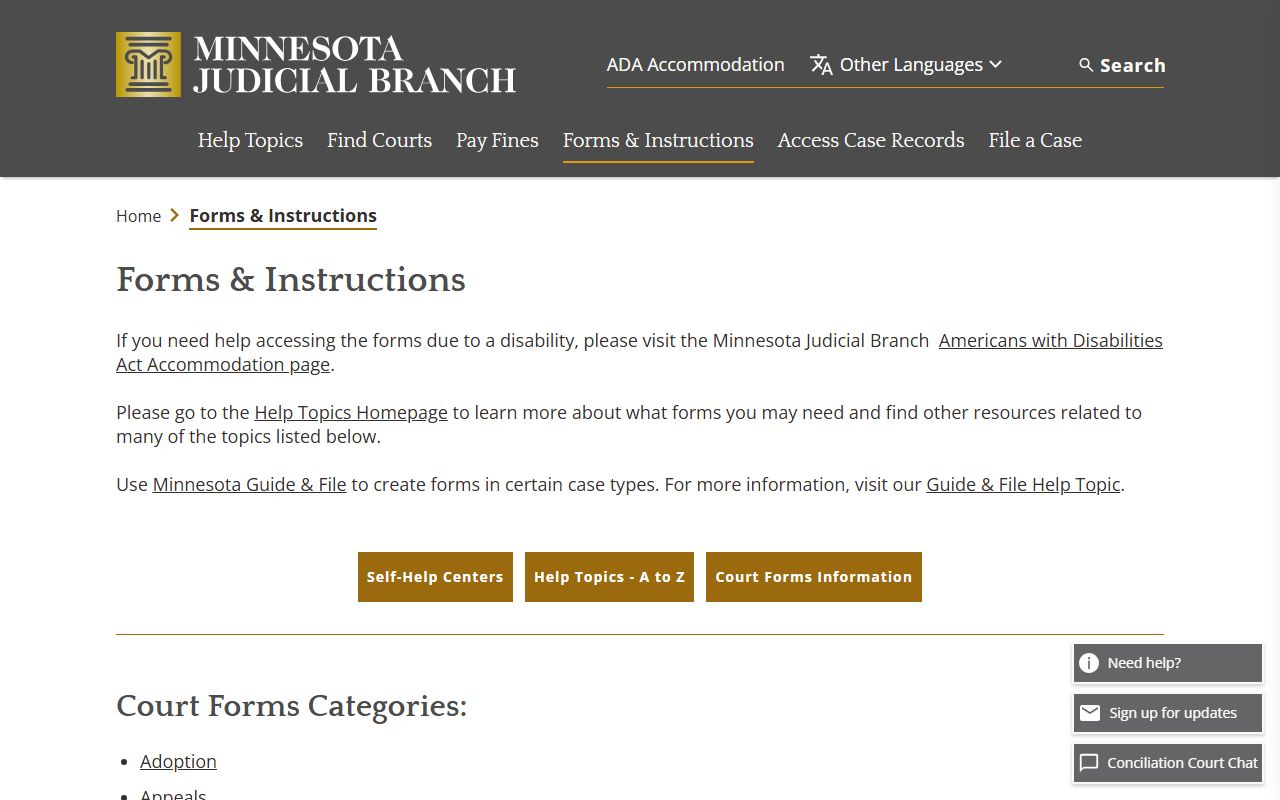
Statewide forms help keep local Redwood County filings aligned with Minnesota practice, but court staff cannot provide legal advice.
Redwood County District Court Programs
No separate Redwood County specialty court homepage was found, but several local or district-level justice programs affect cases. The Redwood County District Court quick links include the Fifth Judicial District Ignition Interlock Program, which is relevant for DWI-related traffic and criminal cases. Redwood Falls Police and the Sheriff's Office also participate in the Driver Diversion Pilot Program for people cited for Driving After Revocation or Driving After Suspension in Redwood County or another participating jurisdiction.
Local criminal and warrant matters may also intersect with the Brown, Lyon, Redwood, Renville Drug Task Force and the Brown, Lyon, Redwood, Renville Emergency Response Unit. Those are law-enforcement programs, not courts. Drug cases, high-risk warrant service, and related investigations still enter the court record through prosecutor-filed charges, warrants, hearings, and District Court orders when a case is filed.
Redwood County District Court Access
Public access to District Court case records depends on the record type, location, and access rule. MCRO gives remote access to many case records, hearing data, monetary judgment details, and public documents that are available online. Courthouse public access terminals can show some public records not available remotely. Court administration is the certified-copy channel and the best fallback for uncertain access questions.
Restricted categories include juvenile and child-protection records, domestic abuse and harassment case types that are not displayed online, sealed and expunged records, adoption files, public documents in civil commitment case types, and party street addresses or comment fields that are withheld from remote display. Juvenile delinquency expungement authority is addressed in Minn. Stat. section 260B.198.
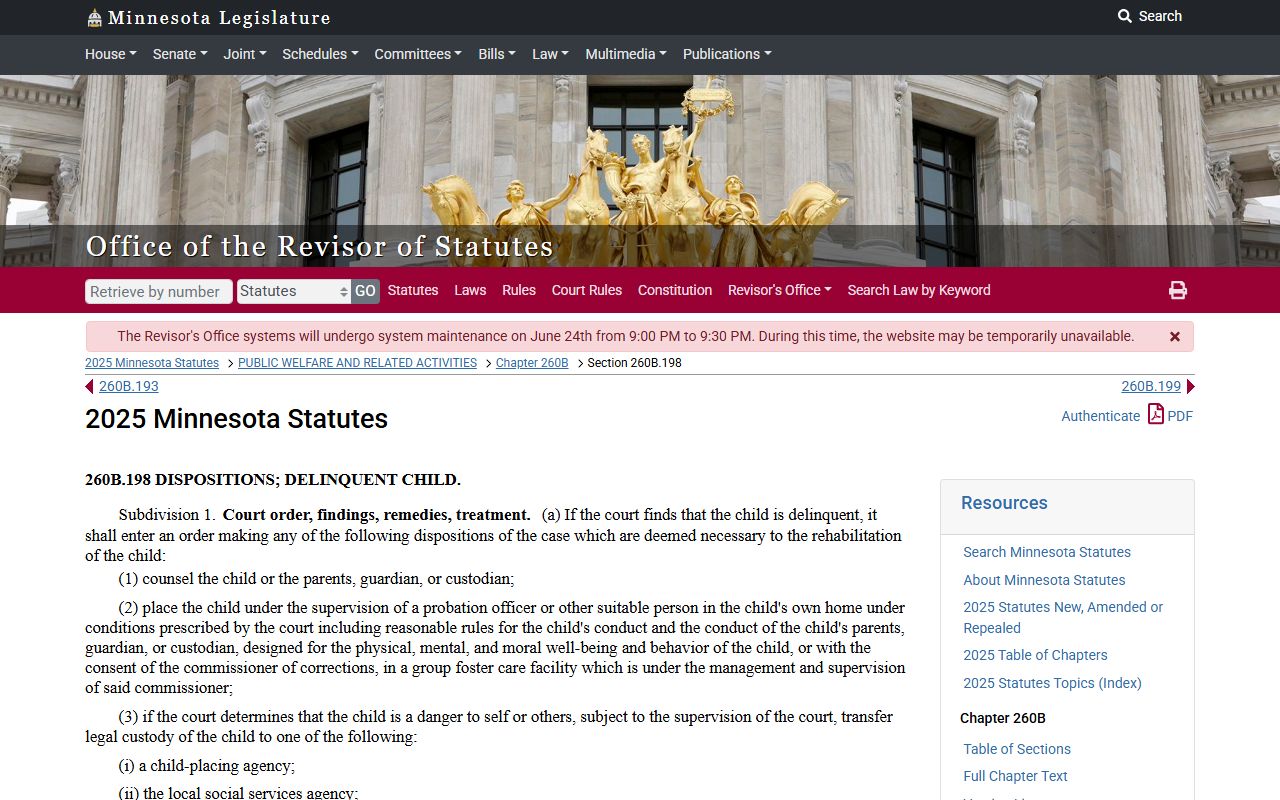
That juvenile access rule is one reason a District Court case may exist even when the public cannot view it through ordinary online search.
Note: Remote court search is narrower than courthouse terminal access, and both are narrower than a party's full case access.
Redwood County Court History
Redwood County's court history began before the county had permanent court space. The county was organized in 1865. Judge Horace Austin convened the first court in June 1866 in a hall belonging to J. Schmall. In 1867, court moved above Louis Robert's store. Early court business included a grand jury hearing tied to the New Ulm Christmas murders, and the clerk of court used his home as an office during those proceedings.
The county later moved through rented and purpose-built courthouse space. In 1870, two citizens offered to build a courthouse if the county guaranteed rent for two years. By 1872 that building was inadequate. Sam McPhail deeded courthouse square to the county, and A. Dolvin built a courthouse in 1873. A vault was added in 1878. The 1892 courthouse followed after reimbursement funds from murder-trial expenses were combined with county funds.
E.P. Bassford of St. Paul designed the 1892 Romanesque Revival courthouse, and William Lettau built it. Granite came from north Redwood, and brick came from a New Ulm brickyard. The courtroom occupied the full second floor, and official court history notes that trials and hearings were a major spectator event. Later changes removed towers, changed entrances, added a vault and south wing, filled windows with glass block and aluminum frames, and modernized utilities.