
Redwood County Court Dockets Defined
A docket is the court's running list of scheduled events and case activity. In Redwood County, docket information comes from District Court calendar data and MCRO case details. A daily calendar can show who is scheduled, where the hearing is set, what type of hearing is planned, which judicial officer is assigned, and the case number. A Register of Actions is broader because it lists case events over time, including filings, orders, hearings, judgments, and financial entries where public.
Redwood County has one state trial court level for local civil, criminal, family, probate, traffic, housing, conciliation, juvenile, and judgment matters. No separate county court, justice court, or municipal court was found for the county. That means docket users should look to Redwood County District Court and statewide Minnesota Judicial Branch systems rather than a city court calendar. Traffic citations may also appear through citation and payment channels when they are payable or newly filed.
Redwood County Daily Calendar
The Redwood County daily calendar is an official Judicial Branch calendar source for hearings that are public and currently posted. It is not a permanent case history and can change as hearings are added, moved, continued, or removed. The calendar is useful when a person needs the next hearing time, courtroom, hearing type, or judge, while MCRO is better for the case's full public docket trail.
Calendar entries observed for Redwood County include civil, probate, criminal, and violations bureau style case numbers. Examples include 64-CV-26-331, 64-PR-25-735, 64-PR-26-335, 64-CR-25-750, 64-CR-26-208, 64-CR-26-143, 64-VB-26-247, and an older probate/guardianship style 64-P5 entry. The first number helps identify Redwood County in the state court numbering pattern, while the letter code helps identify the case type.
| Calendar Field | What It Shows |
|---|---|
| Party Name | The name tied to the scheduled hearing, such as a defendant, petitioner, or protected party where public. |
| Hearing Location | Courtroom A or another location field when listed. |
| Hearing Date and Time | The scheduled date and time for the court event. |
| Judicial Officer | The assigned officer. Observed names include Patrick Rohland and Kayla M. Johnson. |
| Hearing Type | Examples include eviction hearing, account hearing, omnibus hearing, plea hearing, bail hearing, and Rule 8 appearance. |
| Case Number | The docket identifier, such as 64-CR for criminal, 64-CV for civil, 64-PR for probate, or 64-VB for traffic-style matters. |
Find Redwood County Court Dockets
Docket research usually starts in two places: the posted daily calendar for upcoming hearings and MCRO Case Search for case details and the Register of Actions. A person who knows only the hearing date should start with the calendar. A person who knows the case number, citation number, party name, or attorney should use MCRO and select Redwood County.
- Check the Redwood County District Court calendar link from the official court page for current public hearings.
- Use MCRO when the goal is to view the case docket history rather than just today's schedule.
- Search by case number when available, especially for pending criminal, traffic, or petty cases.
- Open the case details and review the Register of Actions for entries, hearings, filings, and public documents.
- Call court administration if a hearing is missing, recently changed, or not available through remote access.
The Minnesota Judicial Branch divorce help topic is one official source tied to family-case filings that can later appear as Redwood County court docket events.
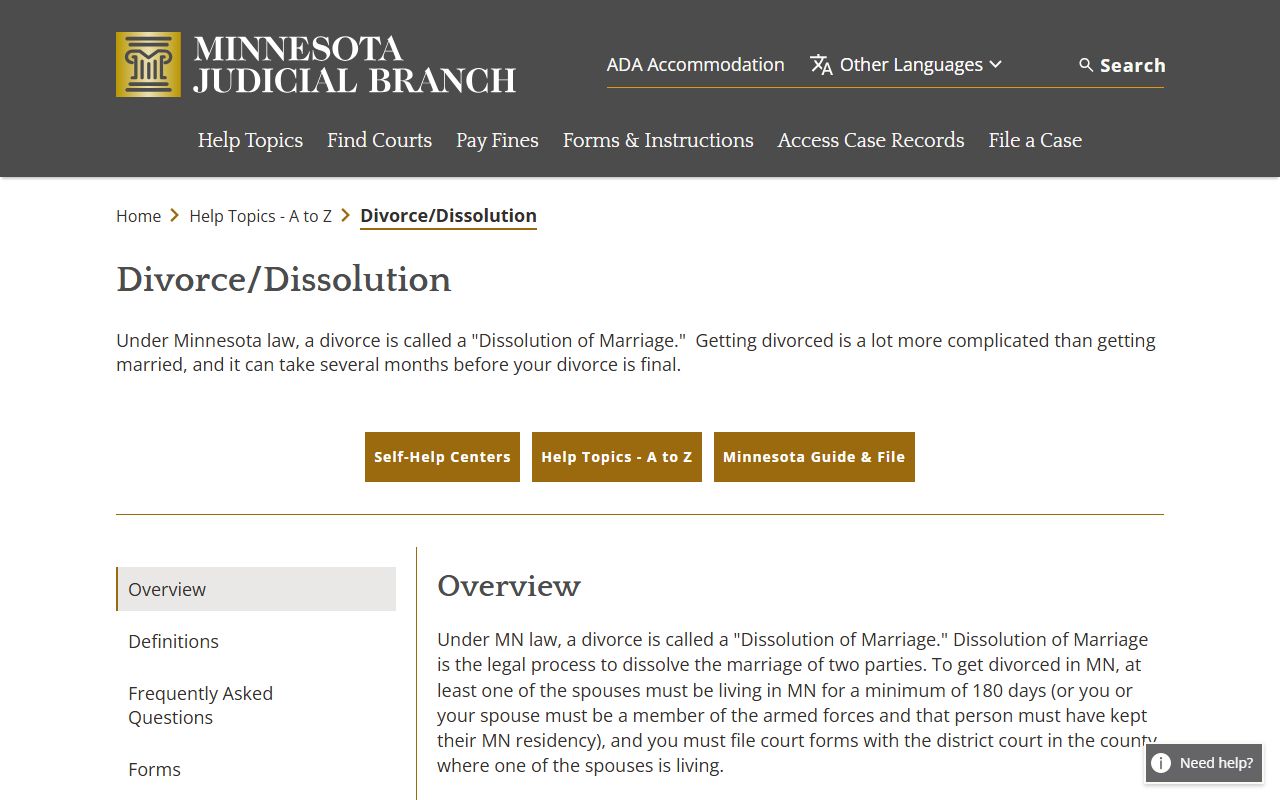
Family docket entries may be public in limited form, but protected details and certain case types are restricted by court access rules.
Redwood County Docket Numbers
Case numbers help separate docket types. A criminal hearing with a 64-CR number is different from a civil 64-CV matter, a probate 64-PR matter, or a violations bureau 64-VB matter. The docket number is also safer than a name search because names can be shared, changed, misspelled, or hidden from remote view in some pending cases.
| Prefix | Likely Case Track | Docket Use |
|---|---|---|
| 64-CR | Criminal | First appearance, Rule 8, omnibus, plea, bail, sentencing, and related hearings. |
| 64-CV | Civil | Civil actions, evictions, judgments, orders to show cause, and settlement events. |
| 64-PR | Probate | Probate hearing, account hearing, guardianship, conservatorship, and estate events. |
| 64-VB | Violations bureau / traffic style | Traffic, citation, and payable offense records where public. |
| 64-P5 | Older probate or guardianship style | Older protective or probate-related files reflected in calendar samples. |
For parties in a criminal docket who need appointed counsel, the Minnesota Judicial Branch public defender page explains when a public defender may be requested.
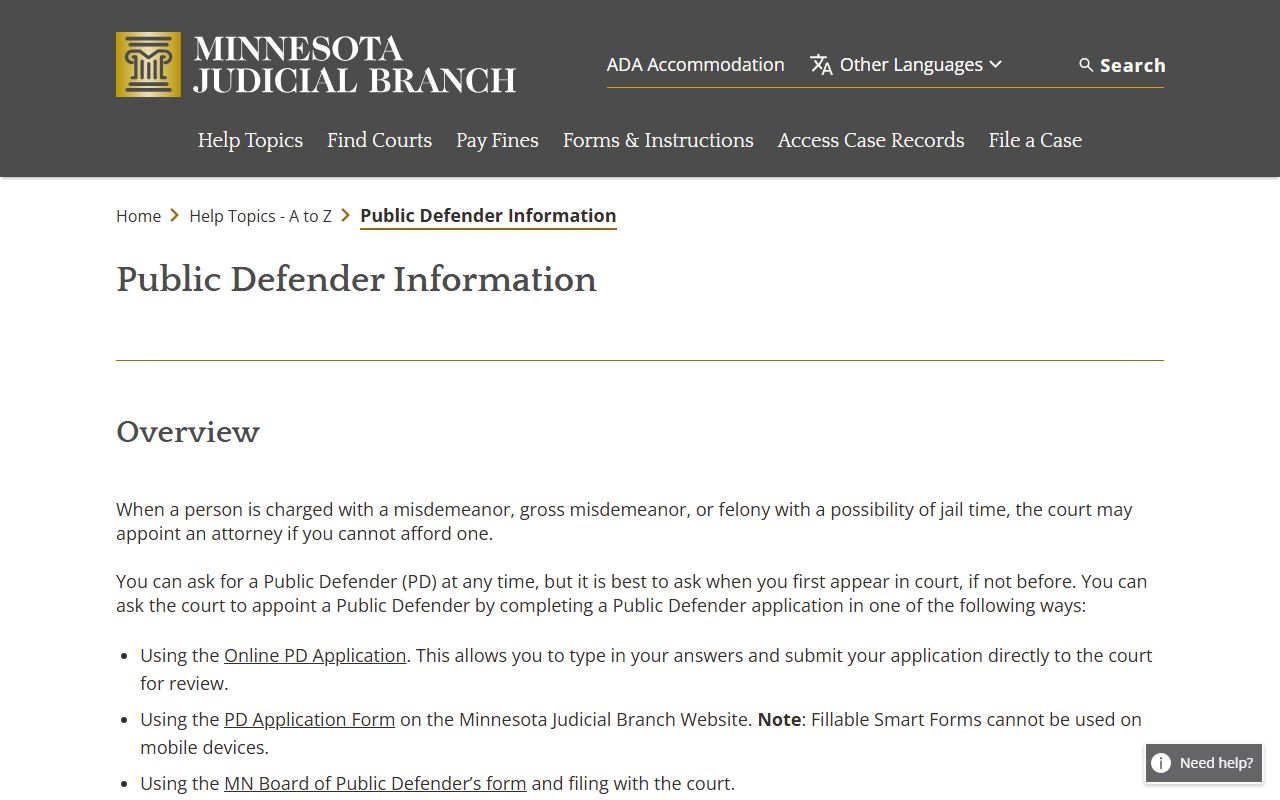
Public defender applications and first appearances can affect how criminal docket entries develop after charges are filed.
Courts Publishing Redwood County Dockets
Redwood County docket information is tied to Redwood County District Court. Minnesota's court hierarchy is Supreme Court, Court of Appeals, and District Court. District Court is the trial court. Redwood County belongs to the Fifth Judicial District, and the local court office is the place to confirm current hearing information when online sources do not answer a question.
- Redwood County District Court handles the county's state trial court docket.
- The Fifth Judicial District is the regional judicial district, not a separate Redwood courthouse.
- The Minnesota Court of Appeals and Minnesota Supreme Court handle state appellate matters after District Court.
- Federal District of Minnesota cases are separate and do not appear on the Redwood County District Court docket.
Free docket and opinion resources may exist outside the county court system for some cases. The CourtListener free alternative is useful for some opinions and docket material where available, but it is not the official Redwood County District Court calendar.
When a local hearing date or official case status matters, the Judicial Branch calendar, MCRO, and court administration remain the governing sources.
Redwood County Dockets vs Case Records
A docket entry is a pointer to case activity. It may show that a complaint was filed, a hearing was held, a motion was submitted, or an order was issued. A full case record may contain the actual complaint, order, judgment, or other public document if that document is available remotely or at the courthouse. Some public documents are not displayed online even when the case itself can be found.
| Point | Docket or Calendar | Full Case Record |
|---|---|---|
| Main use | Track events, hearings, and dates. | Review filed documents, orders, judgments, and public case details. |
| Best source | Daily calendar and Register of Actions. | MCRO, courthouse terminals, and court administration. |
| Access limits | Can omit restricted or changed hearings. | Can include nonremote public records only available at terminals. |
| Certified copy | Not a certified record. | Certified copies must be requested through court administration. |
Read Redwood County Court Dockets
Docket terms are short because the court calendar is built for scheduling. First appearance and Rule 8 are early criminal stages. An omnibus hearing is a Minnesota criminal pretrial event often used in felony or gross misdemeanor cases. A plea hearing may resolve charges or move the case toward sentencing. An account hearing usually appears in probate, guardianship, or conservatorship matters.
Case outcomes should not be guessed from a hearing label. A case type, hearing type, or charge label is not the final result. Use the Register of Actions, disposition entry, judgment, or sentencing record to confirm what happened. For court dates not visible online, call Redwood County District Court at (507) 616-4800. For payable traffic citations, the Court Payment Center can be the more direct route.
Note: Calendars can change close to the hearing date, so confirm urgent appearances with court administration.